What Happens If The Load Dimensions Change After A Florida Oversize Permit Is Issued?
Table Of Contents
-
Introduction
-
Why Load Dimensions Matter After Permit Approval
-
What Happens If The Load Becomes Larger?
-
What Should Dispatch Check?
-
Can You Travel With The Original Permit?
-
What If The Change Is Only A Few Inches?
-
What If The Trailer Or Loading Position Changes?
-
How To Prevent Dimension Problems
-
Common Mistakes To Avoid
-
Why Many Trucking Companies Choose Our Service
-
FAQ
Introduction
When a trucking company applies for a Florida Oversize Permit, the application is based on specific information about the vehicle and load. The reported dimensions help establish the permitted movement and its conditions.
Sometimes the final load changes after the permit is issued. Equipment may be positioned differently, a component may be added, or the loaded vehicle may be taller, wider, or longer than expected.
When this happens, the carrier should review the change before the truck begins the permitted movement. The final vehicle and load should match the information covered by the permit.
Why Load Dimensions Matter After Permit Approval
A Florida Oversize Permit is issued for a specific permitted movement. Florida's permit conditions state that loaded dimensions must not exceed the maximum dimensions shown on the issued permit.
Carriers should compare the final loaded vehicle with the dimensions shown on the permit before departure. This is especially important when the load was measured before loading or secured in a different position.
What Happens If The Load Becomes Larger?
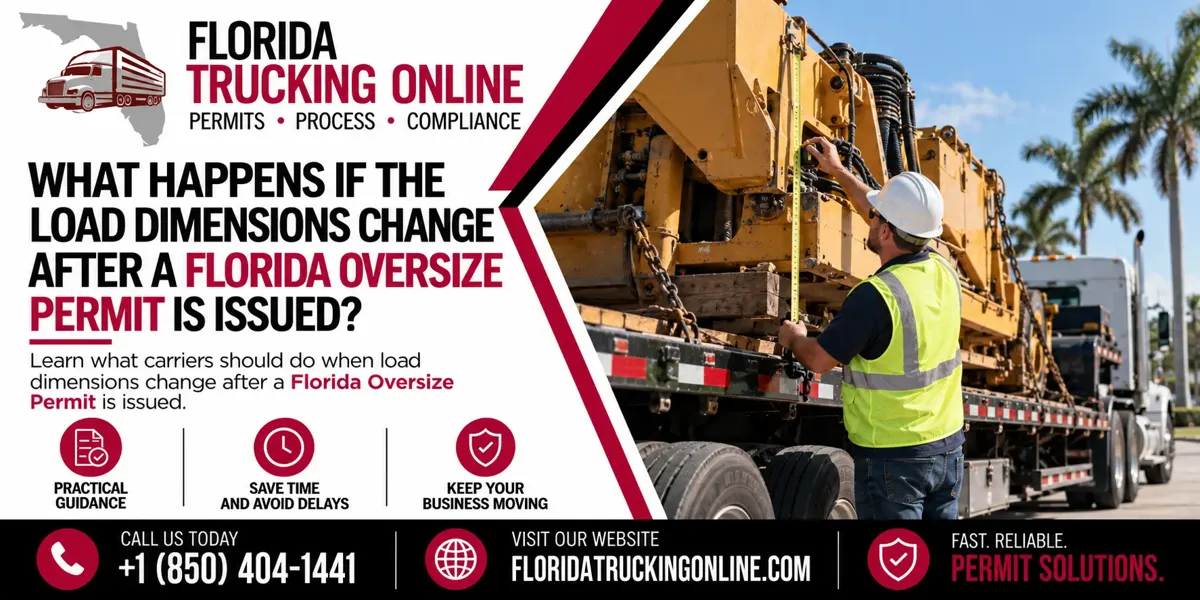
Start by measuring the complete loaded vehicle again. Check the overall height, width, and length, then compare those measurements with the permit.
If the new measurements remain within the authorized dimensions, review the permit conditions and make sure the rest of the vehicle and load information is still correct.
If the actual measurements exceed the permitted dimensions, address the change before traveling. Do not assume that the original permit automatically covers a larger configuration.
For example, a load originally reported at 12 feet wide may measure 12 feet 6 inches after loading. Even a small difference should be reviewed before the trip begins.
What Should Dispatch Check?
When a dimension changes, dispatch should review the complete permit rather than only the measurement that changed.
Important details include:
-
Overall height
-
Overall width
-
Overall length
-
Trailer information
-
Vehicle configuration
-
Load description
-
Gross weight
-
Axle information
-
Origin and destination
-
Approved route
-
Travel dates and conditions
A change in one part of the setup can affect another. A different trailer can change overall length or load position, while a different loading position can affect overhang or total height.
Can You Travel With The Original Permit?
A carrier should not assume that an existing Florida Oversize Permit automatically covers a load with different dimensions.
The permit should be compared with the final loaded configuration before the vehicle starts moving. If the actual dimensions are different, the carrier should determine whether the change remains within the permit or requires additional action. FDOT also states that the vehicle type and load must match the configuration identified on the application.
This is especially important when the new dimensions are greater than the authorized dimensions. Continuing with information that does not match the vehicle can create avoidable compliance problems.
If a last-minute change occurs at the shipper, the driver should notify dispatch rather than beginning the trip and trying to resolve the issue later.
What If The Change Is Only A Few Inches?
Small changes should still be checked. A load may become slightly taller after it is secured, or a component may extend farther from the trailer than expected.
The important measurement is the actual loaded configuration. Carriers should not rely only on the original estimate when the physical load has changed.
What If The Trailer Or Loading Position Changes?
Changing the trailer can affect the permitted configuration. Different trailers can have different dimensions, axle spacing, deck heights, and loading positions.
Moving equipment forward or backward may affect overhang, while a different deck height may affect overall loaded height.
How To Prevent Dimension Problems
The easiest way to prevent dimension problems is to check the measurements before applying and again after the load is secured.
Before applying, carriers should:
-
Measure the load carefully
-
Confirm overall dimensions
-
Verify the trailer
-
Check axle configuration and weights
-
Confirm origin and destination
Before departure, carriers should:
-
Measure the loaded vehicle again
-
Compare the final measurements with the permit
-
Confirm the correct trailer
-
Review the permit conditions
-
Address discrepancies before travel
This final check can prevent a measurement problem from becoming a roadside issue.
Common Mistakes To Avoid
Using Original Measurements: Do not assume measurements taken during planning are still accurate after loading.
Ignoring A Small Change: A few inches can still make the actual configuration different from the permitted dimensions.
Changing Trailers Without Reviewing The Permit: A replacement trailer can affect dimensions and other vehicle information.
Relying On Estimates: Use actual measurements of the loaded vehicle instead of guessing.
Waiting Until The Truck Is On The Road: Review changes before departure rather than trying to correct the problem during the trip.
Assuming Every Configuration Is Covered: A permit should match the vehicle and load configuration for which it was issued.
Why Many Trucking Companies Choose Our Service
Many trucking companies choose Florida Trucking Online because oversize trips can change quickly, and permit details need to be reviewed before a truck moves.
Our service provides fast processing, experienced permit specialists, secure online applications, 24/7 customer support, and weekend and holiday availability to help carriers handle Florida permit needs more conveniently.
When the load changes after a Florida Oversize Permit has already been issued, experienced permit support can help trucking companies review updated information and determine the appropriate next steps before the driver begins the trip.
FAQ
What Should I Do If My Load Becomes Wider After My Florida Oversize Permit Is Issued?
Measure the final loaded vehicle and compare the width with the maximum width authorized on the permit. If the actual width exceeds the permitted amount, address the discrepancy before traveling.
Can I Use My Existing Florida Oversize Permit If The Load Becomes Taller?
Do not assume the existing permit automatically covers the change. Compare the actual height with the permitted height and determine whether additional action is required.
What If The Load Dimensions Change By Only A Few Inches?
The carrier should still review the change. The final loaded dimensions should remain within the limits authorized by the permit.
Can Changing Trailers Affect My Florida Oversize Permit?
Yes. A different trailer can change the vehicle configuration, dimensions, axle information, or loading position. Review the new setup before travel.
What Happens If The Actual Dimensions Are Greater Than The Permit Allows?
Do not assume the existing permit is sufficient. Review the changed dimensions and determine what permitting action is required before the vehicle travels.
For more information, visit the Florida Department of Transportation Overweight and Over-Dimension Permits page.