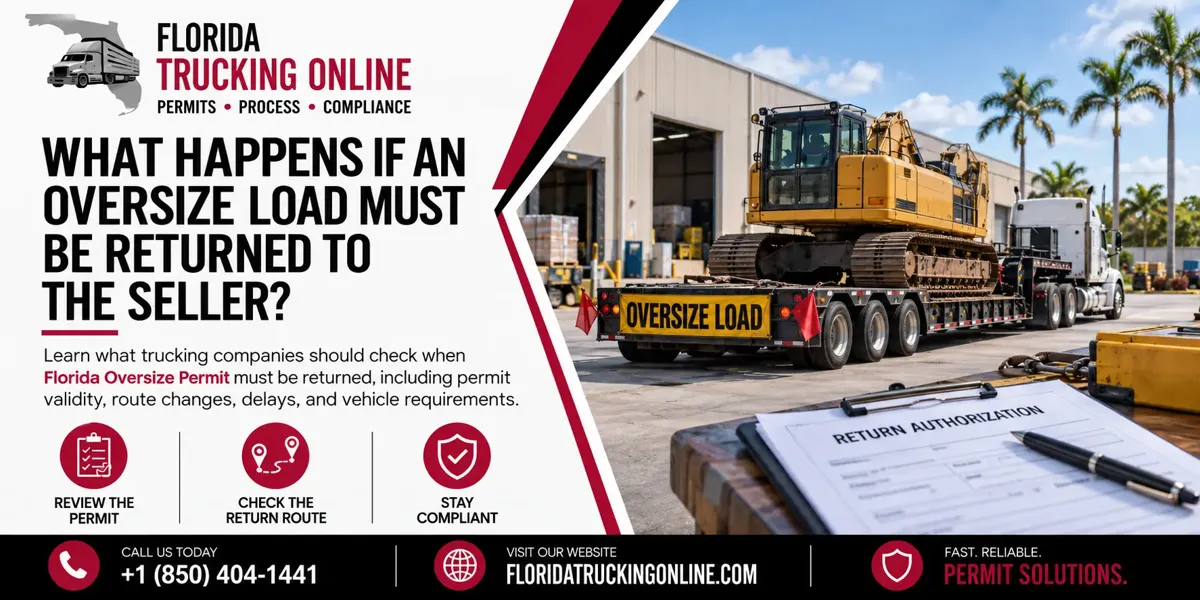
What Happens If An Oversize Load Must Be Returned To The Seller?
Table Of Contents
-
Introduction
-
Why A Return Can Change The Permit Situation
-
Is The Original Florida Oversize Permit Still Valid?
-
What Should Dispatch Review?
-
What If The Route Changes?
-
What If The Load Or Equipment Changes?
-
What If The Return Is Delayed?
-
What Records Should The Carrier Keep?
-
How To Prevent Problems
-
Why Many Trucking Companies Choose Our Service
-
FAQ
Introduction
An oversized load does not always reach the customer as planned. A shipment may be rejected because the equipment does not fit the facility, the customer cannot accept it, the shipment is damaged, or the sale is cancelled. In some cases, the carrier may be instructed to return the load to the seller.
For a carrier operating under a Florida Oversize Permit, the return movement should be reviewed before the truck begins traveling back. Florida permits are issued for specific movements and routes, so the carrier should not assume that the original authorization automatically covers a new return movement.
Why A Return Can Change The Permit Situation
The original trip may have been planned from the seller's facility to a customer destination. Once the load reaches the customer's location, returning it to the seller creates another movement.
For this reason, dispatch should treat a return to the seller as a new permitting question. The fact that the load already traveled under a valid permit does not automatically mean the return has the same authorization.
Is The Original Florida Oversize Permit Still Valid?
A permit can remain within its stated validity period while the circumstances of the movement have changed.
Florida offers several oversize and overweight permit types, including ten-day trip permits and blanket permits. Certain route-specific permits require a defined route to be submitted with the request.
Because the permit type and conditions matter, the carrier should review the document before beginning the return. An active permit should not be treated as unlimited authority to change the origin, destination, route, or load.
If the return is not clearly covered, the carrier should determine what permitting action is required before moving.
What Should Dispatch Review?
Dispatch should compare the proposed return movement with the permit and the actual load.
Important details include:
-
Current load location
-
Seller's return address
-
Vehicle and trailer
-
Load dimensions
-
Gross weight
-
Axle configuration
-
Proposed return route
-
Travel date
-
Permit type and conditions
If the equipment has been removed, the shipment has been repackaged, or the trailer has changed, the permitted characteristics may no longer match the actual movement.
What If The Route Changes?
A return route may look simple when the truck plans to use the same highway in reverse. However, dispatch should still verify the route instead of relying on memory or GPS alone.
A different roadway could contain a bridge restriction, construction area, clearance issue, weight limitation, or local-road requirement that was not considered during the original trip.
The carrier should review the proposed route before the return begins and confirm that the movement is consistent with the applicable permit conditions.
What If The Load Or Equipment Changes?
A returned shipment may not be in exactly the same condition.
The customer may have removed part of the equipment, refused a portion of the shipment, or required the load to be secured differently before it leaves the facility.
The tractor or trailer may also need to be replaced.
Changes in the equipment or load should be reviewed before departure because the original permit may have been issued using different vehicle or load information.
What If The Return Is Delayed?
A return may happen hours or days after the original delivery attempt.
Customer scheduling problems, inspections, repairs, or temporary storage can delay the movement. Dispatch should check the permit's travel period before sending the truck back.
A permit that is no longer within its authorized travel period should not be relied upon for the return.
Addressing the return as soon as the issue is known gives the carrier more time to resolve any permitting question.
What Records Should The Carrier Keep?
Returned loads should have a clear record showing why the shipment was sent back and what happened to the permit.
Useful records include:
-
Original permit
-
Original trip details
-
Return instruction
-
Seller's return location
-
Vehicle information
-
Load dimensions and weight
-
Revised route
-
Return date
-
Dispatch communications
-
Any new or updated permit documentation
These records can help the carrier explain the movement and support the information used for the return.
How To Prevent Problems
The best approach is to review a potential return before the original trip begins.
If a shipment could be rejected or sent back, dispatch can keep the seller's location and load information available. If the return is requested, the carrier can quickly compare the current vehicle and load with the permit.
Before the truck moves, dispatch should verify the return route, travel dates, vehicle information, and permit conditions.
The driver should not begin the return based only on a customer instruction. Permit review should take place before the movement starts.
Why Many Trucking Companies Choose Our Service
Many trucking companies choose Florida Trucking Online because a rejected load or cancelled delivery can create unexpected permitting questions.
Our service helps simplify the permitting process with fast processing, experienced permit specialists, secure online applications, 24/7 customer support, and convenient service for time-sensitive operations.
We help trucking companies review Florida permit requirements when a planned movement changes.
FAQ
Can A Florida Oversize Permit Be Used To Return A Load To The Seller?
A carrier should not automatically assume that the original permit covers the return. The return should be reviewed based on the permit type, route, vehicle, load, and travel period.
Does Returning To The Original Seller Mean The Same Route Is Automatically Covered?
No. Even when the truck uses the same highway in reverse, the carrier should verify that the return movement is covered.
What If The Return Happens The Same Day?
The carrier should still review the permit and confirm that the return movement is authorized.
What If The Load Is Unchanged?
The carrier should still verify the origin, destination, route, and permit conditions.
What If The Trailer Changes Before The Return?
Dispatch should review the vehicle and trailer information because the permit may have been issued using the original configuration.
What If The Return Is Delayed For Several Days?
The carrier should check the permit's validity before beginning the return and address any issue before operating under an expired authorization.
What Documents Should Be Kept?
Keep the original permit, return instructions, vehicle and load information, route details, dispatch records, and any documentation for the return.
How Can Carriers Avoid Problems With Returned Oversize Loads?
Review the return before moving, verify the route and vehicle information, check the permit period, and address any required permitting action in advance.
For more information, visit the Florida Department of Transportation.