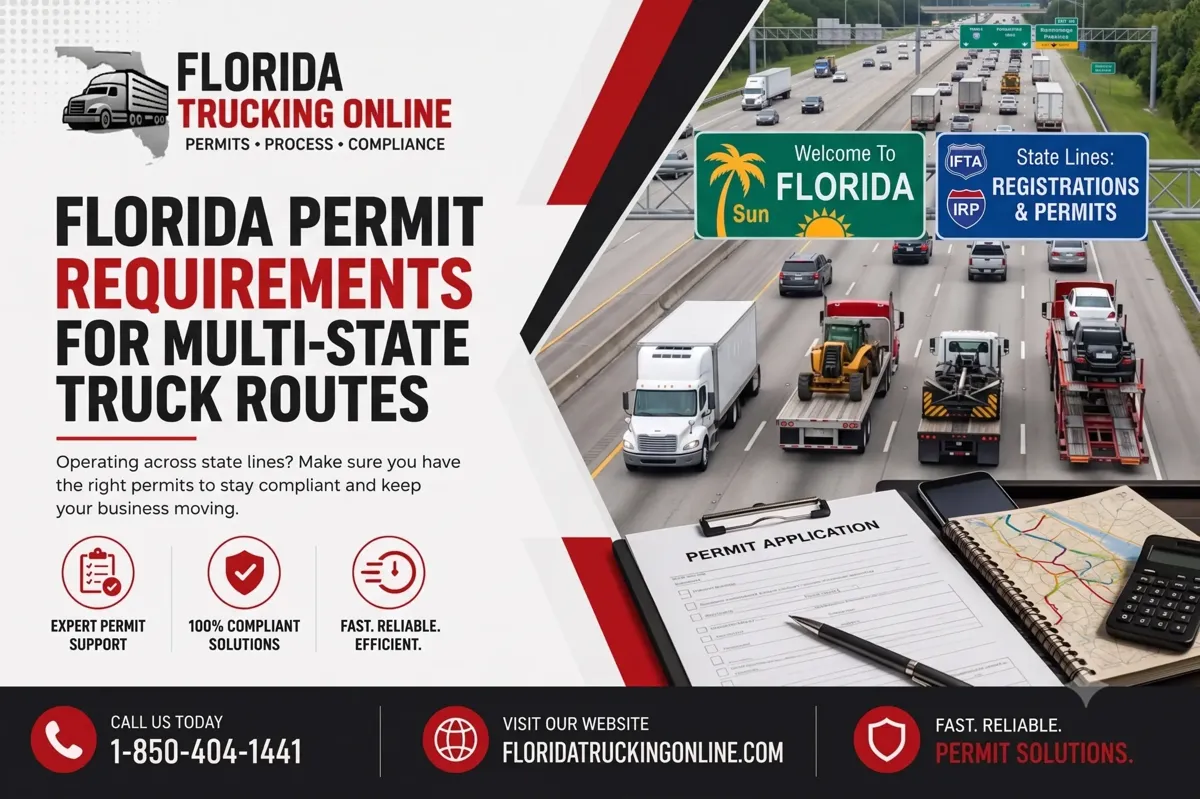
Florida trucking companies that operate across state lines must stay compliant with a variety of permit requirements.
Whether hauling freight throughout the Southeast or transporting goods across the country, understanding Florida permit regulations can help avoid delays, fines, and unnecessary disruptions.
Proper planning is essential for maintaining smooth and efficient operations on multi-state truck routes.
Understanding Florida Trip Permits
Carriers not registered under the International Registration Plan (IRP) may need a Florida trip permit before operating commercial vehicles in the state. A trip permit provides temporary authorization for interstate carriers to travel through Florida without full IRP registration.
Trucking companies should verify permit requirements before entering the state to ensure compliance with applicable regulations.
The Cost of Roadside Fines
Failing to secure proper temporary credentials before crossing the state line can quickly result in costly roadside enforcement actions. Florida Highway Patrol and Department of Transportation officers strictly monitor commercial vehicle registration status at all state scale houses and mobile checkpoints. Entering the jurisdiction without a valid operating authority triggers immediate, expensive citations that directly damage a carrier's profitability.
Forced Downtime and Operational Delays
Beyond the immediate financial penalty, non-compliance leads to forced operational downtime that disrupts entire logistics schedules. Enforcement officers frequently place unpermitted trucks out-of-service on the spot until the proper operational authority is acquired and verified. This forced roadside stoppage causes missed delivery windows, hurts broker relationships, and leaves drivers stranded at inspection facilities for hours.
Determining If Your Truck Needs a Permit
Operating metrics and vehicle configurations dictate whether an out-of-state truck must obtain short-term operating credentials before crossing the state border. A temporary registration provides valid, legal authority for up to ten consecutive days, allowing unregistered commercial vehicles to transit the state safely. Trucking companies must evaluate their configurations before dispatch to ensure they do not meet fine-eligible criteria.
Weight and Axle Thresholds for Compliance
Generally, any out-of-state commercial motor vehicle configuration utilizing three or more axles requires an active temporary permit, regardless of its actual gross weight. Additionally, two-axle vehicles or combination configurations with a gross vehicle weight or registered gross vehicle weight exceeding 26,000 pounds fall under these specific enforcement rules and must carry a permit if Florida is not listed on their permanent IRP cab card.
Why Many Trucking Companies Choose Our Service
Managing permit requirements for multi-state trucking operations can be challenging, especially when different states have different regulations and application processes. Florida Trucking Online simplifies the process by providing fast, reliable assistance with trip, fuel, and oversize permits.
Our experienced team ensures permits are processed accurately and efficiently, helping carriers avoid unnecessary delays and stay compliant on the road. Whether you're operating in Florida or traveling across multiple states, Florida Trucking Online provides dependable permit solutions so you can focus on your deliveries and daily operations.
Multi-state trucking routes require careful planning and attention to permit requirements. By securing the appropriate Florida permits before entering the state, carriers can avoid costly interruptions, maintain compliance, and keep freight moving safely and efficiently throughout their routes.