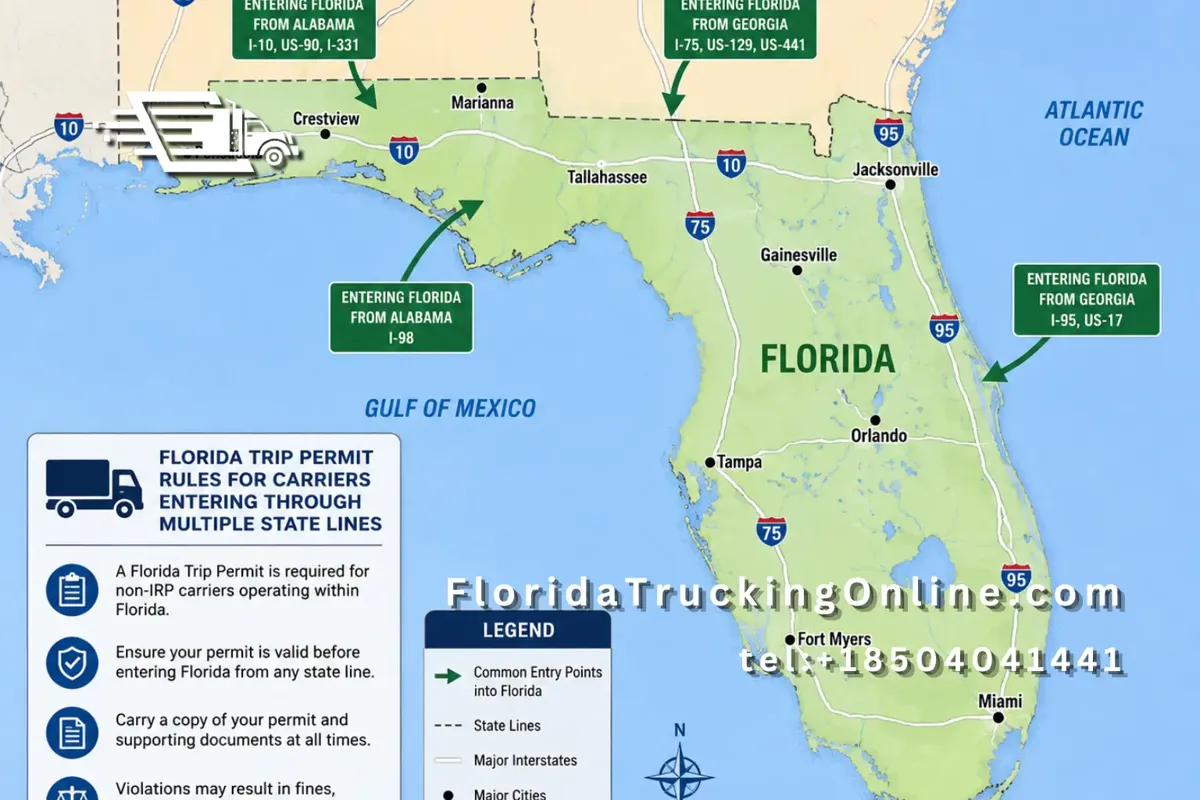
Carriers entering Florida from other states must obtain a trip permit if not registered under the International Registration Plan (IRP).
Understanding Florida's trip permit rules helps avoid delays, penalties, and compliance issues while keeping deliveries on schedule.
Why Florida Trip Permits Matter
A Florida trip permit lets out-of-state commercial vehicles operate temporarily in Florida without full IRP registration. Carriers use this permit for occasional trips or if they have not completed permanent registration.
Carriers entering Florida from Georgia or Alabama must have active permits before crossing the border. Without a valid trip permit, they face fines, citations, or vehicle downtime at inspection points.
Common Multi-State Permit Challenges
Truckers entering Florida through multiple state routes often encounter several compliance challenges, including:
- Incorrect vehicle information on permit applications
- Expired temporary registrations
- Delayed permit processing before scheduled deliveries
- Routing issues involving restricted roads or oversize loads
- Failure to carry proper permit documentation in the cab
These problems worsen when carriers manage permits across multiple states during the same trip.
Why Many Truckers Choose Our Service
Handling permit requirements while coordinating freight schedules can quickly become stressful. Many trucking companies choose Florida Trucking Online because the service simplifies the process and helps carriers obtain permits quickly and accurately.
Our Service helps truckers by:
- Providing fast Florida trip permit processing
- Helping reduce filing errors that can delay operations
- Offering support for the trip, fuel, and oversize permits
- Assisting carriers operating across multiple state lines
- Helping trucking companies stay compliant with Florida regulations
For carriers working on tight delivery schedules, having a dependable permit service can make a major difference in avoiding unnecessary downtime.
Staying Compliant Before Entering Florida
Before crossing into Florida, carriers should take the following compliance steps:
- Confirm all temporary permits are current and valid.
- Ensure vehicle information matches registration records,
- Verify that drivers have all necessary permit documents.
It is important to plan ahead for differing permit requirements when traveling through multiple jurisdictions.
Florida's enforcement agencies regularly monitor commercial vehicle compliance at ports of entry, weigh stations, and highways throughout the state. Proper preparation helps reduce the risk of violations and keeps freight moving efficiently.
For more information, visit Florida Highway Safety and Motor Vehicles.